Surgery
Leaders in surgical care and expertise
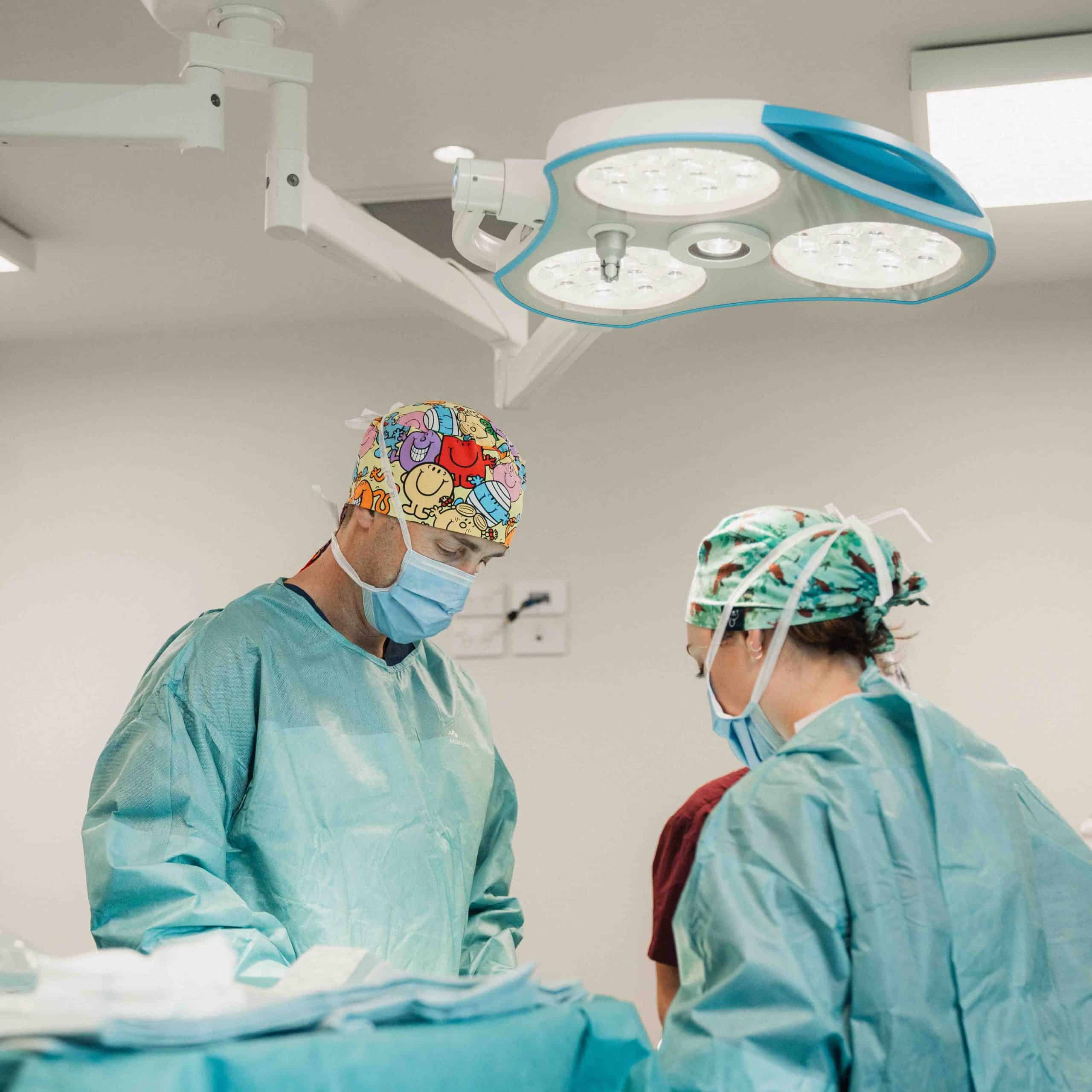
Veterinary Specialists Aotearoa Surgery has a team of surgeons operating from specialist hospitals – Sylvia Park and Henderson, both in Auckland, and in our hospital in Christchurch.
We are proud to offer a comprehensive range of surgical services at all three locations, including orthopaedic, neurologic, oncologic, and soft tissue procedures.
Our surgeons work closely alongside referring veterinarians, partnering with them to diagnose and treat complex surgical conditions in dogs and cats. By working as an extension of your primary veterinarian, we help ensure each patient receives seamless, collaborative care.
We support a diverse and often complex case load, and are committed to delivering thoughtful, high-quality care for every patient and their family.
Focused expertise across our team
- Brain surgery – Dr Richard Jerram and Dr Kyle Clark plus the Veterinary Specialists Imaging team.
- Hip replacement – Dr Alex Walker, Dr Alastair Coomer and Dr Damian Chase
- Minimally invasive surgery – Thoracoscopy and laparoscopy – Dr Kyle Clark
- Arthroscopy – Dr Damian Chase
- Urinary tract surgery and hydraulic sphincter placement – Dr Alastair Coomer
- Reconstructive surgery – Dr Alex WalkerWith a larger, highly skilled team, we’re able to provide tailored expertise across specialised areas—delivering exceptional care at every step.
Meet the team
Dr Richard Jerram
Clinical Director & Registered Specialist Small Animal Surgery
Dr Alastair Coomer
Clinical Director & Registered Specialist Small Animal Surgery
Dr Damian Chase
Clinical Director & Registered Specialist Small Animal Surgery
Dr Kyle Clark
Registered Specialist Small Animal Surgery
Dr Michael Nawrocki
Registered Specialist Small Animal Surgery
Dr Yasmine Messiaen
Registered Specialist Small Animal Surgery
Dr Aparna Tikekar
Registered Specialist Small Animal Surgery
DR GREG LUKASZEWICZ
Dr Greg Lukaszewicz
Surgical Registrar
Dr Ryan Philips
Surgical Resident
Our locations
Surgery Case Studies

ELBOW DYSPLASIA
IN DOGS
The most common cause of front leg lameness in dogs is developmental problems of the elbow joint. This disease leads to degenerative changes (osteoarthritis) in the joint including cartilage damage, bone spur (osteophyte) production, and loose bone fragments.

CERVICAL INTERVERTEBRAL DISK DISEASE
The most common cause of neck pain in the dog is injury to the spinal cord from a slipped (ruptured) disk in the neck. This injury can cause permanent problems with normal activity. Generally, urgent treatment is required to reduce the risk of permanent disability.

TIBIAL PLATEAU LEVELING OSTEOTOMY
The most common cause of hind leg lameness in the dog is injury to the cranial cruciate ligament of the knee (stifle). This injury leads to degenerative changes (osteoarthritis) in the joint including cartilage damage, bone spur (osteophyte) production, and cartilage pad (meniscal) injury.

HIP DYSPLASIA
IN DOGS
One of the most common causes of hind leg lameness in the dog is developmental problems of the hip joint. This diseases leads to degenerative changes (osteoarthritis) in the joint including cartilage damage, bone spur (osteophyte) production, and loose bone fragments.

SHOULDER LAMENESS
IN DOGS
Several of the most common causes of front leg lameness in the dog are problems involving the shoulder joint. These problems can be difficult to diagnose and complete recovery can take several months.

THORACOLUMBAR INTERVERTEBRAL DISK DISEASE
The most common cause of hind leg paralysis in the dog is injury to the spinal cord from a slipped (ruptured) disk in the spine. This injury can cause permanent problems with normal activity and urination. Generally, urgent treatment is required to reduce the risk of permanent disability.

LUMBOSACRAL INTERVERTEBRAL DISK DISEASE
One of the most common causes of lower back pain in the dog is injury to the spinal cord from a slipped (ruptured) disk in the spine. This injury can cause permanent problems with normal activity and urination. Generally, urgent treatment is required to reduce the risk of permanent disability.

PATELLA LUXATION
IN DOGS
One of the most common causes of hind leg lameness in the dog is instability of the kneecap (patella). Sometimes, this instability can lead to degenerative changes (osteoarthritis) in the joint including cartilage damage, bone spur (osteophyte) production, and cruciate ligament injury.

LARYNGEAL
PARALYSIS
The most common cause of breathing difficulties in older dogs in a condition called laryngeal paralysis. This condition typically affects older dogs (>8 years of age) and seems to be more common in Labrador Retrievers and their cross breeds.
Head over to our news page for more cases, patient stories and the latest VSA news.